The numbers and letters on a car battery tell you its physical size, which way round the terminals are, how much energy it holds and how hard it can push on a cold morning. Fitting a battery that matches on all of these is what makes it start reliably and sit safely in the tray. Here is how to read them.
The battery has to fit, physically
Before anything else, the battery has to go in the space the car gives it and be held down properly. There are three parts to that.
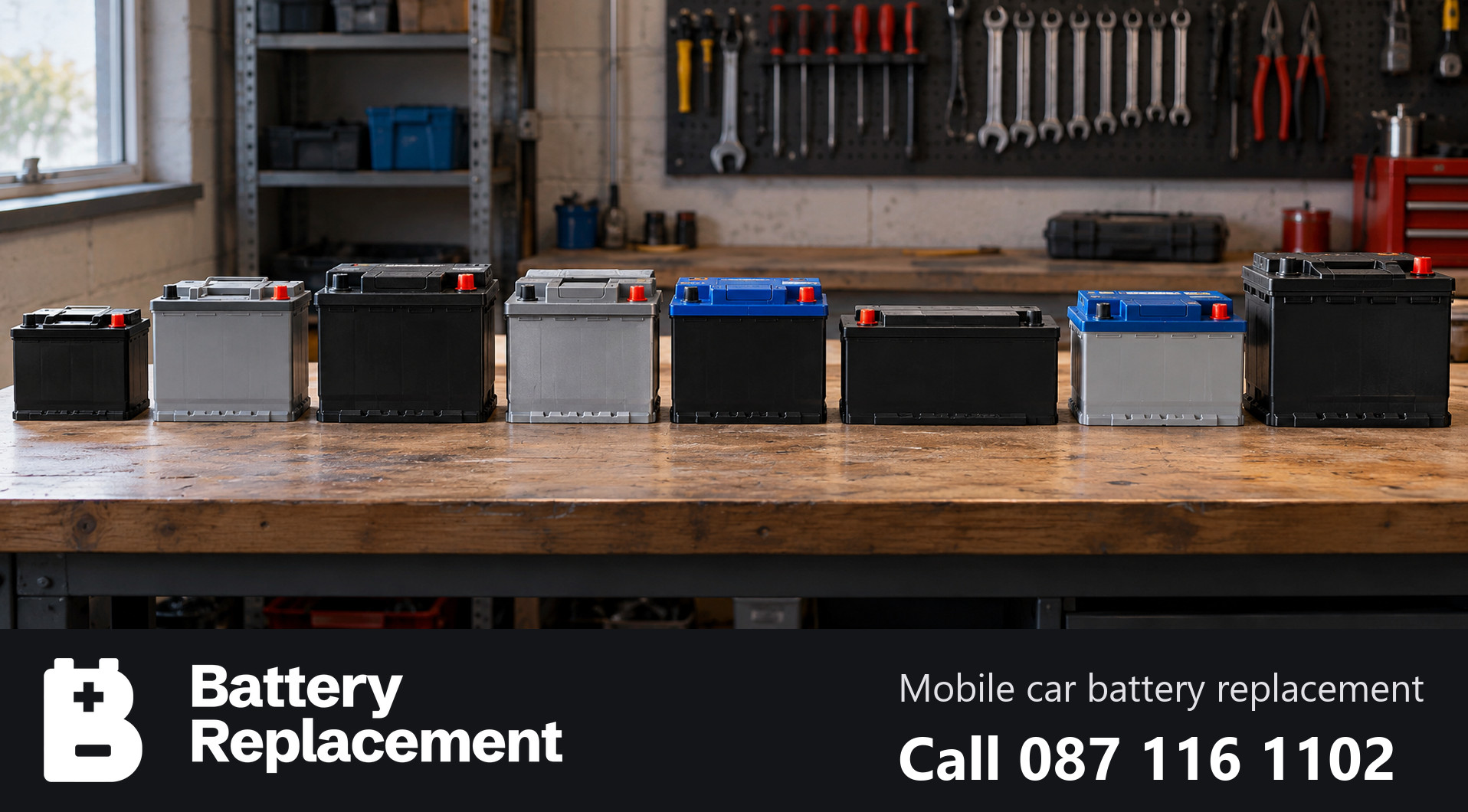
Case size
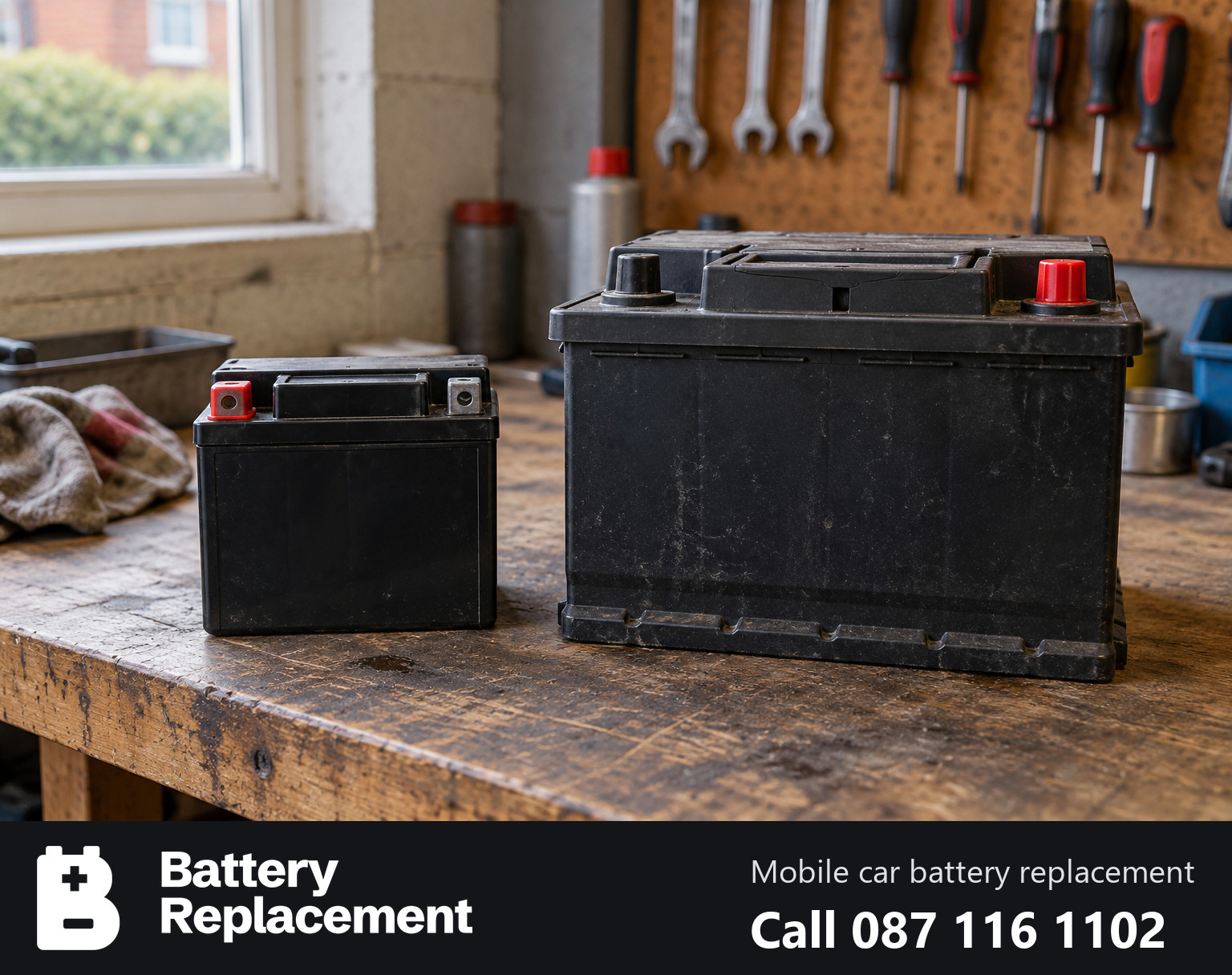
Car batteries come in standard case sizes. In Europe these are usually described by length, width and height in millimetres, and many batteries also carry a short group or type code that stands for a particular case size. A battery that is too tall may foul the bonnet or a cover; one that is too short or narrow may not be gripped by the clamp. A loose battery vibrates, and vibration is one of the quiet killers of a battery’s internal plates.
Hold-down and base
Most European car batteries have a ledge around the bottom of the case that a clamp bites onto. The shape of that ledge is part of the standard. Some cars use a strap over the top instead. The replacement has to suit whichever method your car uses.
Terminal layout and position
The two posts on top are the positive and negative terminals. On most European batteries they are round, tapered posts, with the positive slightly thicker than the negative so the leads cannot be swapped by accident. Which side the positive is on matters too. If it is on the wrong side, the car’s leads may not reach, or may be stretched across the top of the battery, which is unsafe. Some batteries, especially on Japanese and Korean models, use smaller posts or a different layout.
The numbers that describe performance
Voltage
Nearly every car, van and 12 V system in a hybrid or electric car uses a 12 volt battery. The number is on the label and there is nothing to choose here. You match it.
Capacity, in ampere-hours (Ah)
Capacity tells you how much energy the battery can store. It is written as a number followed by Ah. A higher figure means the battery can run the car’s systems for longer when the engine is off and has more in reserve. Cars with more equipment, bigger engines or a start-stop system are usually specified with a higher capacity. Fitting a lower capacity than the car was designed for is a false economy; it will work for a while but it will be running close to its limits.
Cold cranking amps (CCA)
This is the figure that matters most on a frosty morning. Cold cranking amps describes how much current the battery can deliver for a short burst at a low temperature while still keeping its voltage up. A bigger or diesel engine needs a higher CCA to turn over in the cold. The number on the label is measured to a standard; different standards exist, so two batteries can quote different numbers for the same real performance. That is why we go by the car maker’s specification rather than by the biggest number on a shelf.
Type codes: standard, EFB and AGM
Alongside the size and performance numbers, a battery will say what kind of construction it has.
- Standard flooded batteries are the traditional type and suit most cars without start-stop.
- EFB (enhanced flooded) batteries are a tougher version, built for cars with basic start-stop systems.
- AGM (absorbent glass mat) batteries hold the acid in fibreglass mats, cope with frequent deep discharge and recharge, and are fitted to most cars with start-stop plus energy recovery, and to many premium models.
A car designed for AGM should get AGM. A car designed for EFB can usually take EFB or AGM. A car designed for a standard battery does not need either, although it will not be harmed by them. Our AGM and EFB start-stop battery page goes into this further.
Where to find your car’s battery specification
The easiest way is to look at the battery that is in the car now, assuming it is the correct one. The label will show the voltage, Ah, CCA and type, and often a size code. Take a photo of it before you phone anyone.
Other places to look:
- The owner’s handbook, usually under “technical data” or “specifications”.
- A sticker in the engine bay or near the battery on some models.
- The car maker’s own parts system, which we can check from the registration number, make, model, engine and year.
Be aware that the battery currently fitted is not always the right one. We sometimes find a car running on a smaller or cheaper battery than it was built for, fitted in a hurry by a previous owner. If the car has been hard to start, that is worth knowing.
Why “near enough” is not good enough
It is tempting to think that any 12 V battery of roughly the right size will do. In practice:
- A battery with too little capacity or CCA will crank slowly in the cold and wear out early.
- A standard battery in a start-stop car can fail within a short time and may stop the start-stop system working.
- A battery that does not fit the clamp can move, short against the bonnet or crack its case.
- Terminals on the wrong side can leave cables under strain.
Getting it right costs nothing extra once you know the specification; it is simply a matter of picking the correct part. The price depends on the battery your car needs and is agreed before we fit it. How that works is set out on our battery prices page.
What we do when you call
You tell us the make, model, year and, if you can, the engine size and whether it has start-stop. We confirm the correct battery specification, bring it to your home or workplace in Dublin or Meath, fit it, check the charging voltage, and make sure the clamp and terminals are tight. Some modern cars also need the new battery coded, so ask when you book. Full details are on our car battery replacement page.
Frequently asked questions
Can I fit a bigger battery than the original?
Sometimes a slightly higher capacity in the same case size is fine and even helpful. A physically bigger case will not fit or clamp properly. Go by the car maker’s specification and the space available.
What is the difference between Ah and CCA?
Ah is how much energy the battery stores; CCA is how much current it can deliver in a short burst when cold. Both matter, for different reasons.
The old battery has no readable label. What now?
Give us the registration number, make, model, year and engine, and we will look up the correct specification.
Does the battery brand matter?
Less than the type, size and specification. A correctly specified battery from a reputable maker is what we fit.
Get the right battery, fitted where the car is
Call Battery Replacement Dublin on 087 116 1102 with your car details, or use our contact page. We will tell you what the car needs and agree the price before we come out.