If most of your driving is the school run, a trip to the shops and a few minutes to the station, your car battery is probably never fully charged. Every start takes a large amount of energy out, and a short drive does not give the alternator time to put it back. Over months, that gap adds up, and the battery wears out sooner than it should.
What happens when you start the car
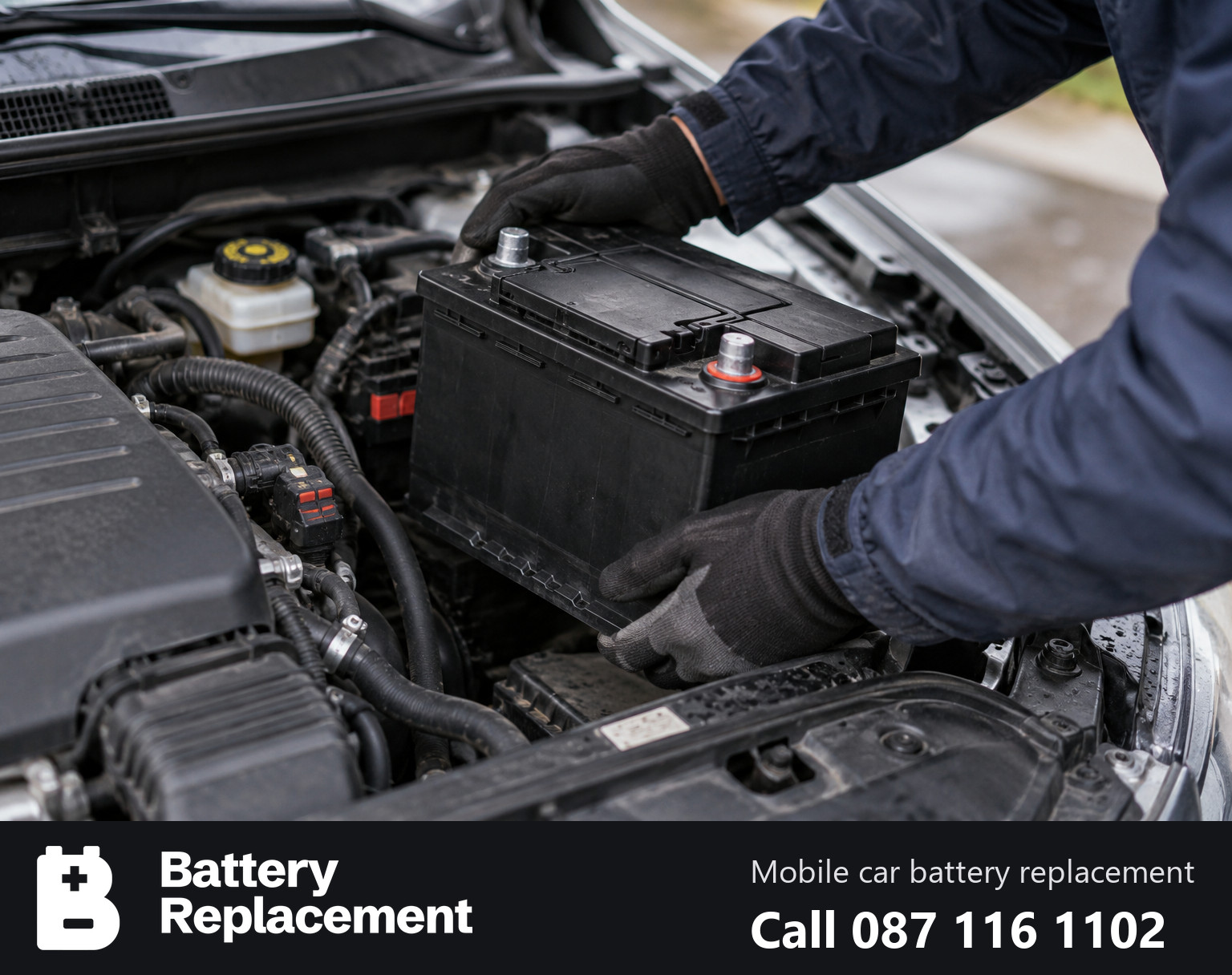
Turning the key, or pressing the button, asks the battery for a short, heavy burst of current to spin the starter motor and fire the engine. On a cold morning the engine oil is thicker, the engine turns harder, and the battery, which is also cold, has less to offer. That single start is the biggest demand your battery faces all day.
Once the engine is running, the alternator takes over. It powers the car’s electrics and, with whatever is left, recharges the battery. The catch is that recharging is not instant. A battery takes in charge quickly at first and then more slowly as it fills. It needs a decent run before it is back to where it was.
Why a short trip never catches up
Picture a typical day in Dublin. Start the car, drive ten minutes to drop the children off, stop. Start again, five minutes to the shop, stop. Start again, home. Three starts, maybe twenty minutes of engine running in total, much of it at idle in traffic where the alternator produces less.
On a cold, dark evening the lights, wipers, heated rear window, blower and radio are all running too. The alternator feeds those first. The battery gets the leftovers.
The result is a battery that ends each day slightly lower than it started. It may be fine for weeks or months, because a healthy battery has plenty in reserve. But a battery that spends its life partly discharged ages faster. The chemistry inside a lead-acid battery prefers to be kept full, and when it is held low for long periods the plates gradually lose their ability to accept charge. That loss does not come back.
Start-stop cars and short trips
Cars with a start-stop system face this even harder. The engine switches off at every red light and restarts when you lift your foot off the brake. In town, that can mean dozens of restarts in a single journey, each one drawing on the battery while the alternator is not running.
This is exactly why these cars are fitted with AGM or EFB batteries, which are designed to cope with repeated discharge and recharge. A standard battery put into one of these cars will struggle badly on a short-trip diet. If your start-stop system has stopped kicking in, the car may have decided the battery is too low to risk it. Our AGM and EFB start-stop battery page explains the difference.
How to tell your battery is undercharged
An undercharged battery does not announce itself. It just gets gradually less willing. Watch for:
- A slower crank in the morning, particularly after a cold night or a weekend parked up.
- Headlights that dip when you start the engine or brighten when you rev it.
- Start-stop not engaging, or engaging and then not restarting smoothly.
- The clock or radio presets resetting, which can mean the voltage dropped very low during a start.
- A battery warning light that comes on briefly on start-up and then goes out.
None of these on their own means the battery is finished. Together, on a car that mainly does short trips, they usually mean it is being starved of charge.
What you can do about it
Take the long way home once a week
A single run of around half an hour on a road where you can keep a steady speed, with the heated extras switched off, gives the alternator a proper chance to top the battery up. The M50, the N7 or a run out towards Ashbourne or Navan does the job. It is not a cure for a worn battery, but it keeps a healthy one healthy.
Reduce the load during the start
Before you turn the key, make sure the lights, blower, heated screen and seat heaters are off. The starter gets every available amp, and the battery is not asked to do two jobs at once.
Use a maintenance charger if you can
If the car lives on a driveway near a socket, a small smart charger designed for car batteries can be connected overnight or over a weekend. Follow the charger’s instructions, keep leads away from moving parts and water, and do not use it on a battery that is cracked, leaking or bulging.
Combine trips
Two separate five-minute journeys are worse for the battery than one ten-minute journey, because there is one start instead of two and the engine runs for longer in one go.
Check the age of the battery
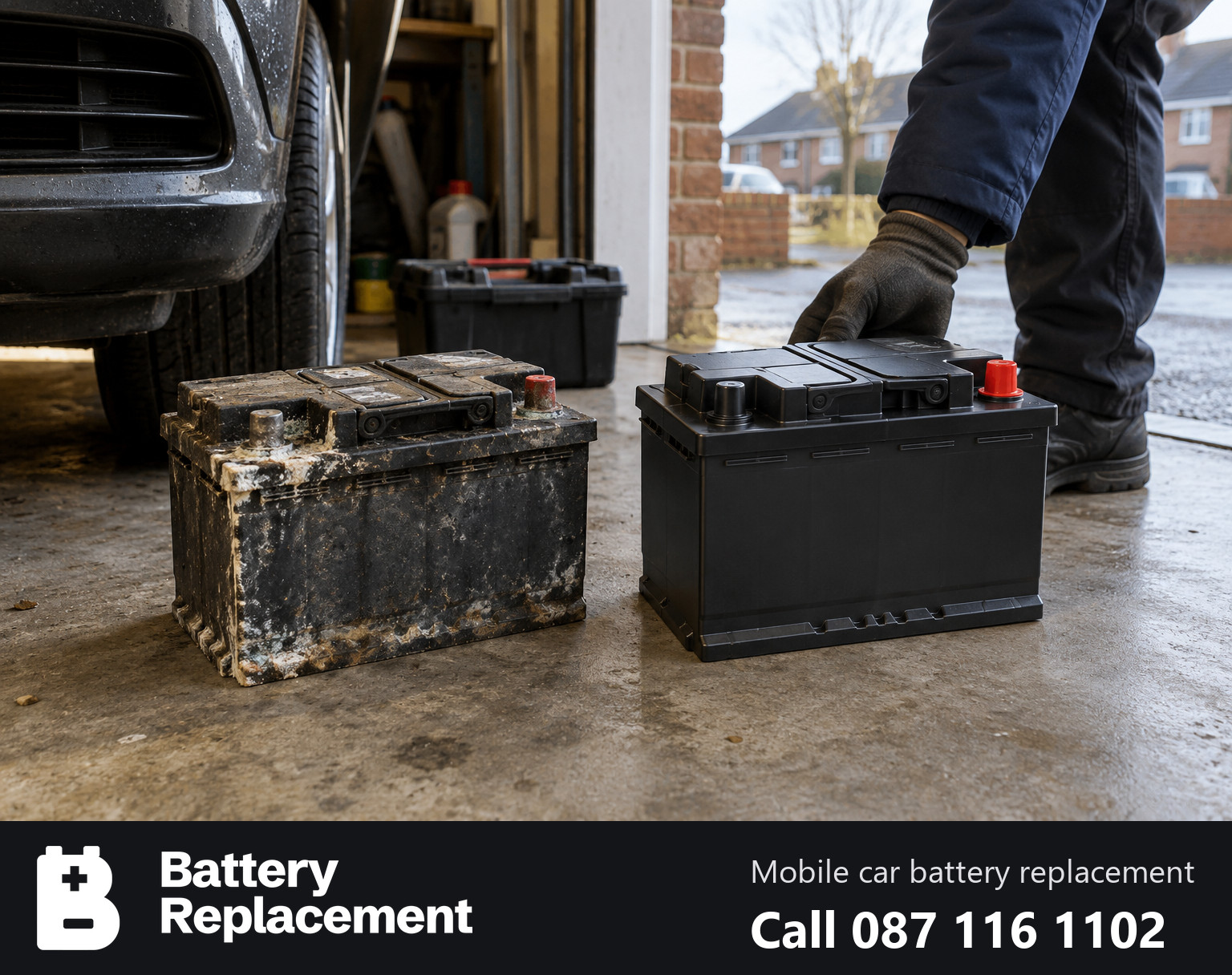
If the battery is already several years old, short trips will simply finish it off sooner. A battery that is tested as weak is better replaced on your terms than on a frosty morning when you are late.
When replacement makes more sense than nursing it along
There comes a point where no amount of long drives will help. A battery whose plates have degraded will take charge, show a reasonable voltage when the engine is off, and still fail to deliver enough current to turn a cold engine. That is a worn battery, not a flat one, and only a replacement fixes it.
We can test it where it sits. If it needs replacing, we fit the correct type for your car, including AGM and EFB for start-stop models, at your home or work anywhere in Dublin or Meath. The price depends on the battery your car needs and is agreed before we fit it. You can see what is involved on our car battery replacement page, or read about everything we do on our battery replacement services page.
Frequently asked questions
How long a drive is enough to charge a battery?
It depends on how low the battery is and on the car, but as a rule a steady run of half an hour or so with minimal electrical load does far more good than several short hops. A badly discharged battery will need a charger rather than a drive.
Does idling in the driveway charge the battery?
Only very slowly. At idle the alternator produces less, and the car’s own systems take much of it. It is also not great for the engine or your neighbours. A drive is better.
My car only does short trips. Should I get a bigger battery?
Not necessarily bigger, but the right type matters. A start-stop car must have the AGM or EFB battery it was designed for. On any car, the correct size and specification for the model is what counts.
Will a jump start fix an undercharged battery?
A jump start will get the engine running, but it does not charge the battery. If you only need a jump rather than a new battery, ask when you call and we will point you the right way.
Call Battery Replacement Dublin
If your car is cranking slowly or the start-stop has gone quiet, call 087 116 1102. Tell us the car and the address, and we will test and, if needed, fit the right battery where the car is parked.